Bulgaria vignette 2026: prices, rules and how to order
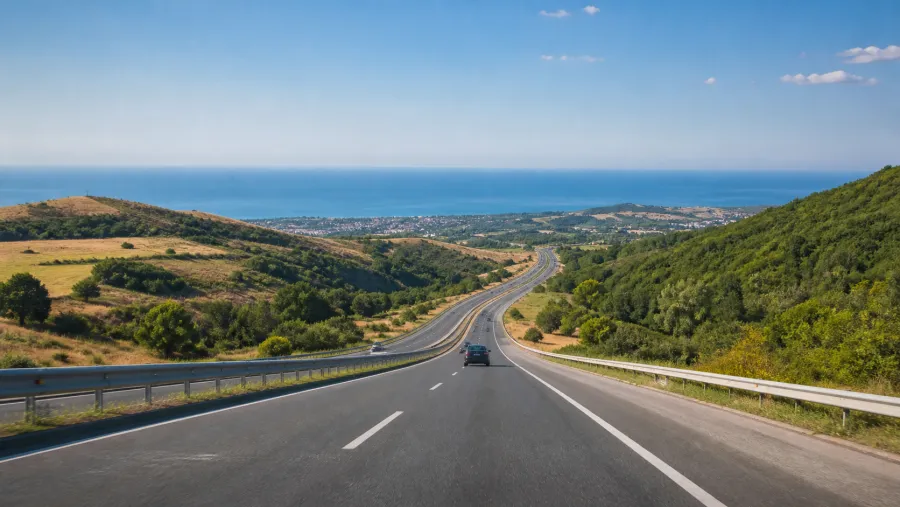
The Bulgarian e-vignette costs €5.30 for one day, €6.60 for a weekend, €10.00 for seven days, €19.90 for 30 days, €35.90 for three months and €64.50 for a year following the increase of 1 August 2026. Bulgaria requires it on first-class national roads as well as motorways, and since the euro changeover in January 2026 every tariff is quoted in euro rather than leva.
On this page
How much does the Bulgaria vignette cost in 2026?
A vehicle up to 3.5 tonnes pays €5.30 for a one-day Bulgarian e-vignette, €6.60 for the weekend permit, €10.00 for seven days, €19.90 for 30 days, €35.90 for three months and €64.50 for the year. Those tariffs took effect on 1 August 2026, when the Road Infrastructure Agency raised the vignette by roughly 30 percent under a decree published the same day in the State Gazette. Any Bulgarian price dated before that decree is now too low, which matters because most travel guides still quote the old scale.
| Duration | Vehicle up to 3.5 t | Reference in BGN | Best for |
|---|---|---|---|
| 1 day | €5.30 | 10.37 lv | A single transit crossing |
| Weekend | €6.60 | 12.91 lv | Friday to Sunday trips |
| 7 days | €10.00 | 19.56 lv | Most holiday trips |
| 30 days | €19.90 | 38.92 lv | A longer stay |
| 3 months | €35.90 | 70.21 lv | A season on the coast |
| 1 year | €64.50 | 126.15 lv | Regular drivers and commuters |
Official BGTOLL tariffs effective 1 August 2026. Lev figures are shown only for reference, converted at the fixed rate of 1.95583 BGN to €1; Bulgaria charges in euro.
Why Bulgarian prices are quoted in euro now
Bulgaria adopted the euro on 1 January 2026, replacing the lev at the fixed rate of 1.95583 BGN to one euro, and BGTOLL now sets and collects vignette tariffs in euro. The lev prices still circulating online are doubly out of date, first from the changeover and then from the August increase. An annual vignette that many sources still list as 97 leva is now €64.50, about 126 leva at the fixed rate.
Which roads the Bulgarian vignette covers
The Bulgarian e-vignette is required on every motorway and on first-class republican roads outside built-up areas, a wider net than most European vignettes cast. The motorway list runs to the A1 Trakia from Sofia to Burgas, the A2 Hemus toward Varna, the A3 Struma toward the Greek border, the A4 Maritsa toward Turkey, the A5 Cherno More and the A6 Europe toward Serbia. Because first-class roads are included, dropping off the A1 onto a parallel route to save the fee does not work. Municipal and third-class roads and streets inside towns are free.
How long each Bulgarian vignette lasts
The Bulgarian daily vignette covers one calendar day, and the weekend vignette runs from Friday at 12:00 to Sunday at 23:59, which is the cheapest legal cover for a short break that starts on a Friday afternoon. The seven-day, 30-day, three-month and annual vignettes run from the start date you choose. The whole system has been electronic and plate-linked since 1 January 2019, so nothing goes on the windscreen and enforcement works by matching the plate in the BGTOLL register.
The weekend vignette cannot be stretched. A Bulgarian weekend permit expires at 23:59 on Sunday, so a driver leaving on Monday morning is unregistered from midnight. If your trip touches a Thursday or a Monday, the €10.00 seven-day vignette is the correct purchase, and it costs only €3.40 more than the weekend option.
Who does not need a Bulgarian vignette
Bulgaria exempts motorcycles and other vehicles with fewer than four wheels from the e-vignette entirely, so a motorcyclist can cross the country without paying anything for road use, which is unusual in the region. Vehicles over 3.5 tonnes also sit outside the vignette, but they are not exempt: they pay the distance-based BGTOLL toll through an on-board unit or a single-use route pass bought for a declared itinerary. Camper vans in category M1 stay inside the vignette system and pay the same tariffs as a car.
What happens if you drive without one
Bulgaria gives an unregistered driver a way out before the fine, and taking it is far cheaper. The compensatory fee for a vehicle up to 3.5 tonnes rose to €46.50 on 1 August 2026 alongside the vignette increase, and paying it closes that detection. Refusing it leaves the full administrative fine of €153.39 for a car. Enforcement is camera-based, through the fixed and mobile equipment BGTOLL runs across the tolled network, so a missing vignette is recorded automatically rather than caught at a checkpoint.
How to order a Bulgarian vignette through Vignettera
Choose the duration and start date, enter the licence plate exactly as it appears on the vehicle, add the country of registration, and pay. Our team registers the e-vignette in the Bulgarian system, normally within 5 to 30 minutes during working hours, and emails a confirmation showing the plate, the validity window and both the state tariff and our service fee. Keep that email; the Bulgarian vignette is a database record against your plate and there is nothing to display.
You can equally buy directly from the operator at bgtoll.bg or web.bgtoll.bg, through the MyBgToll app, at a self-service terminal or at a petrol station near the border, and pay the state tariff alone. Drivers use Vignettera when a single route needs Hungarian, Romanian and Bulgarian permits at once and they would otherwise work through three national portals in three languages, each with its own rules about when validity starts.
Bulgaria vignette FAQ
How much is the Bulgaria vignette for 7 days?
The seven-day Bulgarian e-vignette costs €10.00 for a vehicle up to 3.5 tonnes at the tariff that took effect on 1 August 2026. It is the usual holiday purchase, because it covers arrival and departure days that the €6.60 weekend permit cannot, and it costs less than two separate daily vignettes at €5.30 each.
Is the Bulgarian vignette a sticker?
No. Bulgaria has issued electronic vignettes linked to the licence plate since 1 January 2019, so nothing is attached to the windscreen. BGTOLL stores the permit against the plate and the country of registration, and cameras verify it automatically, which means the plate must be entered exactly as it appears on the vehicle.
Do I need a vignette on Bulgarian national roads?
Yes on first-class republican roads outside built-up areas, and yes on all motorways. Bulgaria charges more of its network than a typical motorway vignette covers, so leaving the A1 Trakia for a parallel first-class road does not avoid the fee. Municipal roads, third-class roads and streets inside towns need no vignette.
What is the compensatory fee in Bulgaria?
The Bulgarian compensatory fee is a payment offered instead of a fine when a vehicle is recorded without a valid vignette, and it rose to €46.50 for vehicles up to 3.5 tonnes on 1 August 2026. Paying it settles that detection. Declining it leaves the administrative fine of €153.39 for a car, roughly three times as much.
Are Bulgarian vignette prices still in leva?
No. Bulgaria joined the euro on 1 January 2026 at the fixed rate of 1.95583 BGN to €1, and BGTOLL now sets vignette tariffs in euro. Lev amounts still shown by third-party sites are conversions or stale figures, and the older 97-lev annual vignette has been replaced by the €64.50 annual price set in August 2026.
Does a camper van pay the car rate in Bulgaria?
A camper van in category M1 up to 3.5 tonnes pays the same Bulgarian e-vignette tariffs as a car, from €5.30 for a day to €64.50 for a year. Above 3.5 tonnes the vehicle leaves the vignette system and pays the distance-based BGTOLL charge through an on-board unit or a single-use route pass instead.