Which European countries require a vignette in 2026?
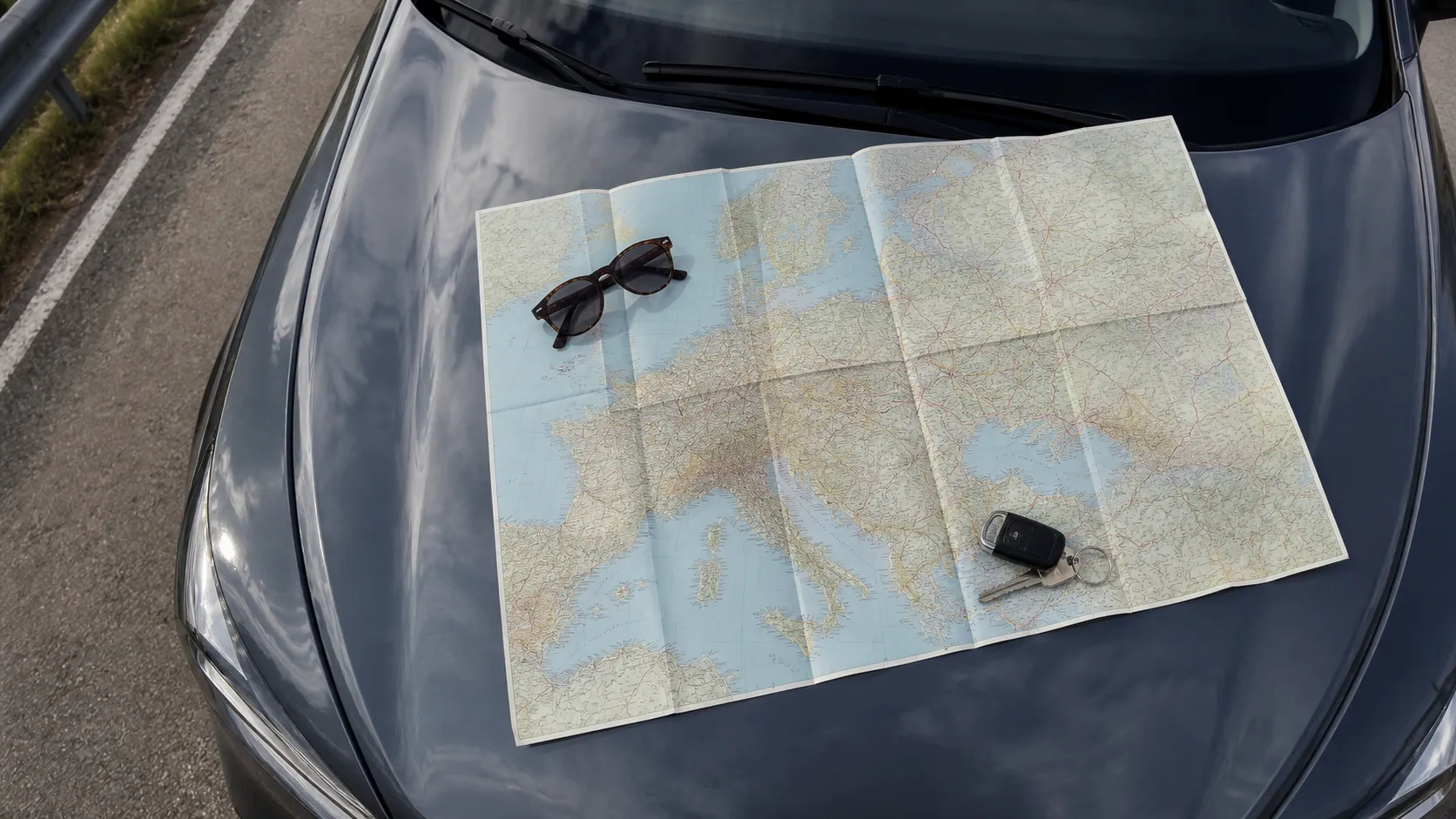
Eight European countries require a vignette for cars in 2026: Austria, Switzerland, Czechia, Slovakia, Slovenia, Hungary, Romania and Bulgaria. Everywhere else on the continent you either pay at toll barriers, as in France or Italy, or drive free, as in Germany. Here is what each system looks like, and what your route actually needs.
On this page
The short answer: eight countries, all digital
Austria, Switzerland, Czechia, Slovakia, Slovenia, Hungary, Romania and Bulgaria are the eight European countries that require a vignette for a car up to 3.5 tonnes in 2026. In every one of them the modern version is electronic: you register your licence plate, a camera reads it, and nothing goes on the windscreen. Austria is the last holdout still selling the adhesive sticker alongside the digital vignette, and ASFINAG has confirmed that 2026 is the sticker's final year. From 2027 the whole vignette map of Europe is plate-linked.
The word "vignette" just means a time-based pass. You pay once for a day, a week or a year of motorway use, rather than per kilometre at a barrier. That makes it cheap for long transits and slightly annoying for people who only clip a corner of a country, which, as you will see below, describes half the routes through central Europe.
All eight vignette countries at a glance
The eight vignette countries each run their own system, and the shortest pass a visitor can buy ranges from one day in Austria to a full year in Switzerland. The table below shows the shortest sensible option for a car in 2026, using the official operator tariffs checked in August 2026. Follow the country links for full price lists, validity rules and ordering.
| Country | Shortest visitor option | 2026 price | Worth knowing |
|---|---|---|---|
| Austria | 1 day, or 10 days | €9.60 / €12.80 | ASFINAG tariff; 10 days is the usual holiday pick |
| Switzerland | Annual only | CHF 40 | FOCBS; valid 1 December 2025 to 31 January 2027 |
| Czechia | 1 day, or 10 days | CZK 230 / CZK 300 | Official e-Dálnice tariff, electronic only |
| Slovakia | 1 day, or 10 days | €8.10 / €10.80 | eznamka system, no stickers since 2016 |
| Slovenia | 7 days | €16.00 | DARS e-vinjeta, class 2A for a normal car |
| Hungary | 1 day, or 10 days | Ft 5,550 / Ft 6,900 | NÚSZ e-matrica, category D1 |
| Romania | 1 day, or 10 days | €3.50 / €6.00 | CNAIR rovinieta; car tariffs change from 1 September 2026 |
| Bulgaria | Weekend, or 7 days | €6.60 / €10.00 | BGTOLL rates after the 1 August 2026 increase |
Official operator tariffs (ASFINAG, FOCBS, e-Dálnice, eznamka, DARS, NÚSZ, CNAIR, BGTOLL), checked August 2026. Romania has announced new car tariffs from 1 September 2026, so check the Romania page if you travel after that date.
Countries that charge tolls instead of a vignette
France, Italy, Spain, Portugal, Croatia, Poland and Greece charge distance-based tolls at barriers or gantries, so no vignette exists there and none is needed. You pay for the kilometres you actually drive, at a booth, by card, or through a free-flow camera system. Germany charges nothing at all for cars on its Autobahn, which is why so many vignette questions start with "I am driving from Germany to...".
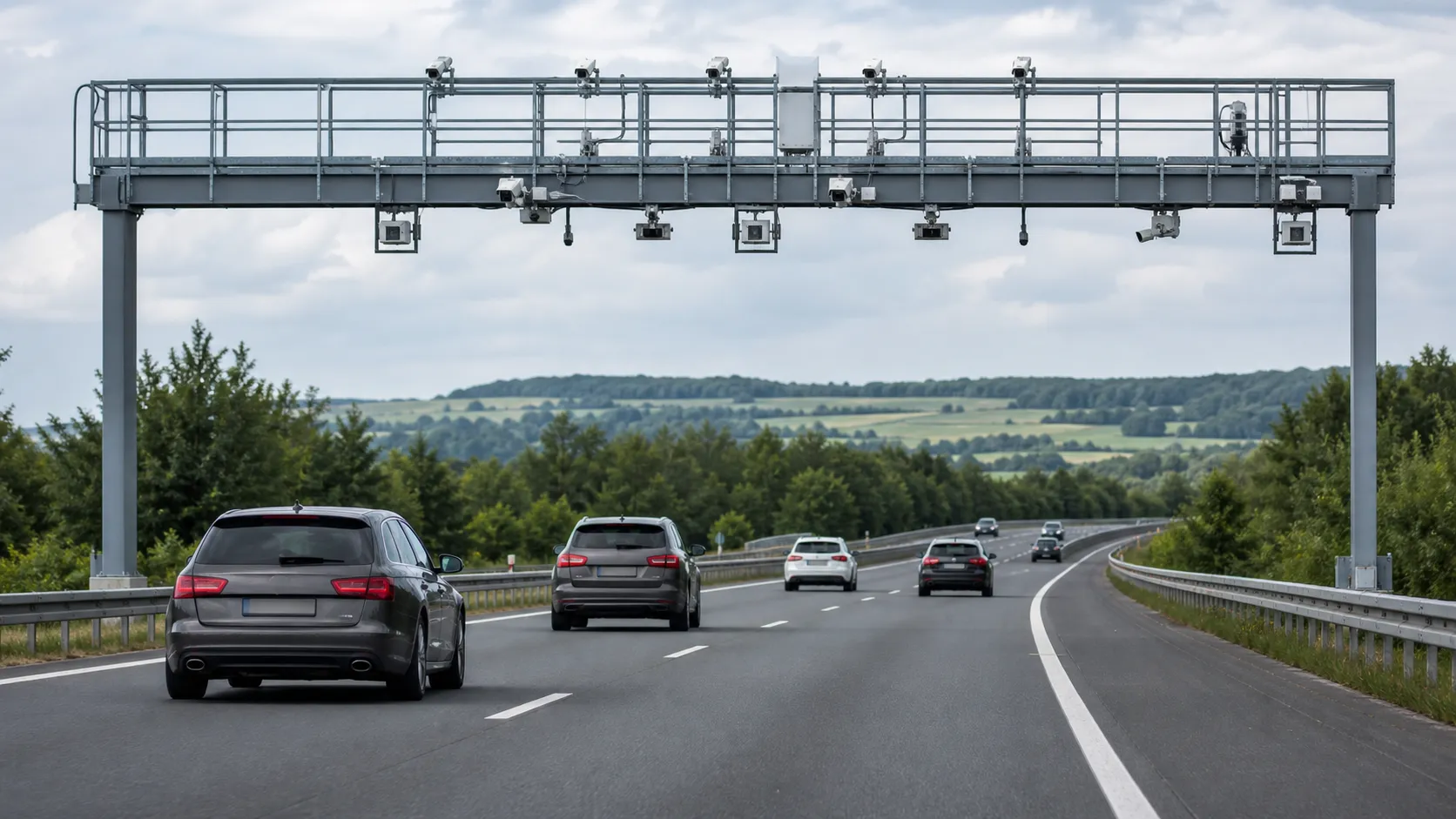
The practical difference matters for budgeting. A toll country charges you more the further you go, and a vignette country charges the same whether you drive 40 kilometres or 400. Crossing Austria costs one 10-day vignette plus, on some alpine routes, a separately tolled tunnel. Crossing France on the autoroute can cost several times that, and no vignette in the world will help you at a French péage barrier.
What typical routes across Europe actually need
Most trips through central Europe need two or three vignettes, one per country crossed, because no pass covers more than a single country. A few worked examples make it concrete.
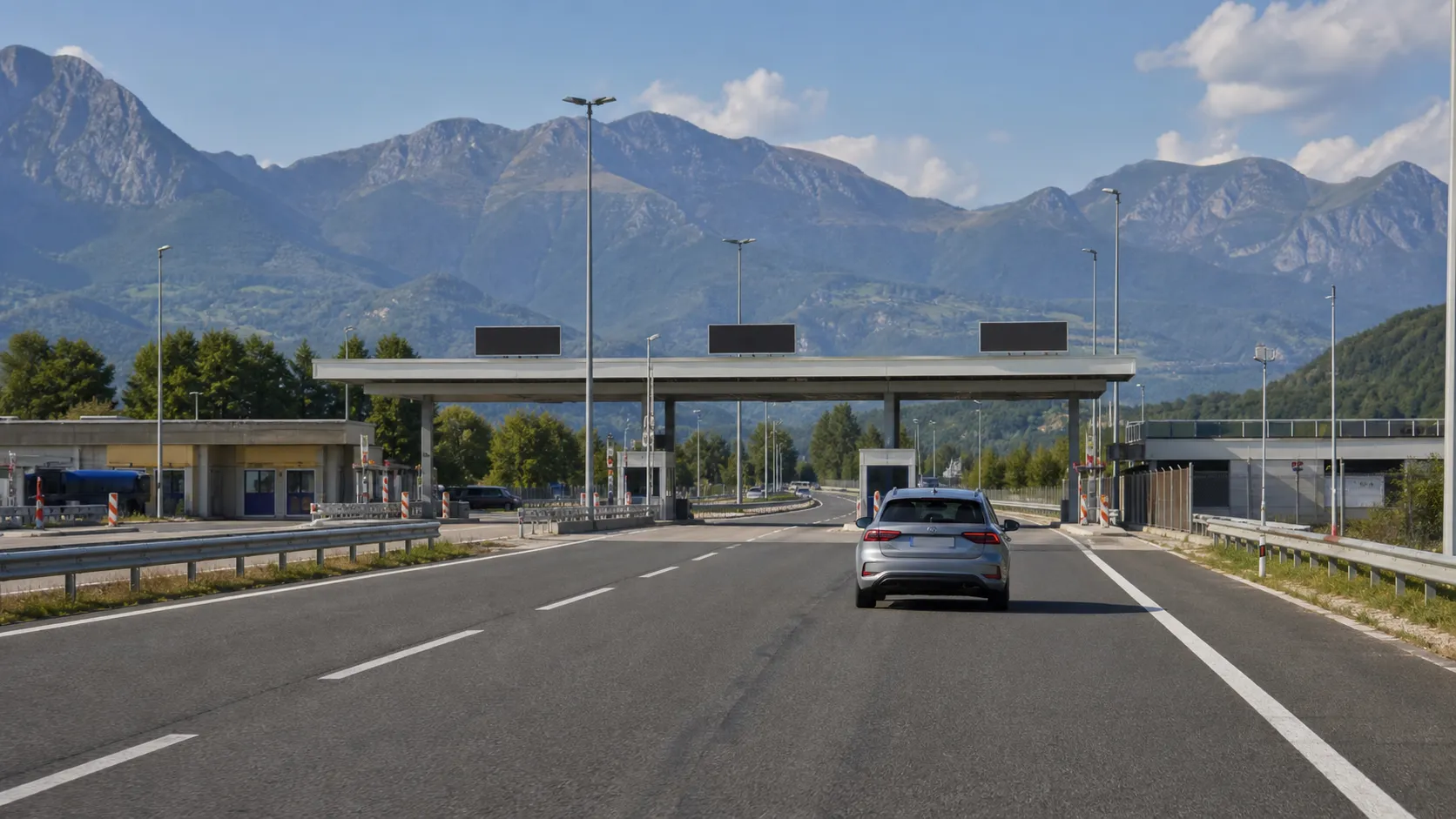
Munich to the Croatian coast is the classic. You need an Austrian vignette for the motorway to the border and a Slovenian e-vinjeta for the short but unavoidable stretch past Ljubljana, then Croatia switches to barrier tolls. Two vignettes, bought before you leave, and the whole run is smooth. Prague to Vienna needs a Czech e-vignette and an Austrian one. Vienna to Budapest adds a Hungarian e-matrica the moment you cross at Nickelsdorf. And the long haul toward Istanbul through Romania and Bulgaria needs both of those, on ordinary roads as well as motorways, which surprises almost everyone.
Zurich deserves its own sentence. Switzerland sells exactly one product, an annual vignette, so a two-hour transit on the A3 costs the same CHF 40 as a year of commuting. Nobody calls this fair. It is, however, the rule, and the Switzerland page explains the few mountain-pass routes that legally avoid it.
The rules that catch drivers out
The expensive mistakes in the vignette countries are almost never about price, they are about scope and timing. These four come up constantly.
Romania and Bulgaria charge on normal roads too. The rovinieta and the Bulgarian e-vignette apply to national roads, not just motorways, so "I will just avoid the highway" does not work there the way it does in Austria or Czechia.
Timing is the second trap. Short Austrian vignettes bought online are valid immediately, but the annual and 2-month versions can be caught by a statutory waiting period unless you waive your withdrawal right, a quirk covered in detail on the Austria page. Third, vehicle class: a high-roof campervan in Slovenia falls into a more expensive class than a car, and the cameras do check. Fourth, prices move mid-year. Bulgaria raised every vignette tariff by 30 percent on 1 August 2026, and Romania's CNAIR has scheduled new car tariffs from 1 September 2026. A price you memorised in spring may simply be wrong by autumn, which is why every figure on this site carries its check date.
Sorting your vignettes before you leave
The easiest way to handle a multi-country route is to order every vignette you need in one go, registered against your plate, before you set off. You can buy from each national operator separately, and that is the cheapest route if you enjoy filling in four portals in four languages. Vignettera does it in one checkout: pick the countries, enter your plate once, and the team registers each official digital vignette and emails the confirmations, with the state fee and service fee itemised. Order your official digital vignettes here and cross every border on that trip already covered.
Vignette countries FAQ
Which European countries require a vignette in 2026?
Eight European countries require a vignette for cars in 2026: Austria, Switzerland, Czechia, Slovakia, Slovenia, Hungary, Romania and Bulgaria. All eight sell a digital version linked to the licence plate, and in Romania and Bulgaria the permit is required on main national roads as well as motorways.
Do I need a vignette if I stay off the motorways?
In Austria, Switzerland, Czechia, Slovakia, Slovenia and Hungary, no, the vignette covers only motorways and expressways, so a route on ordinary roads is legal and free, just slow. In Romania and Bulgaria, yes, the rovinieta and the Bulgarian e-vignette are required on national roads too, so there is no practical way to drive through either country without one.
Is there one vignette that covers all of Europe?
No. There is no pan-European vignette. Each of the eight countries runs its own system with its own operator, its own prices and its own validity periods, so a drive from Germany to the Croatian coast through Austria and Slovenia needs two separate vignettes, one Austrian and one Slovenian.
What happens if I drive without a vignette?
Every vignette country enforces with plate-reading cameras or roadside checks and charges a substitute fee or fine that is many times the vignette price, for example CHF 200 in Switzerland against a CHF 40 vignette. The exact amounts are listed on each country page, and the cheapest fix is simply having the right vignette registered before you cross the border.