Vignette or toll road? How European motorway charging actually works
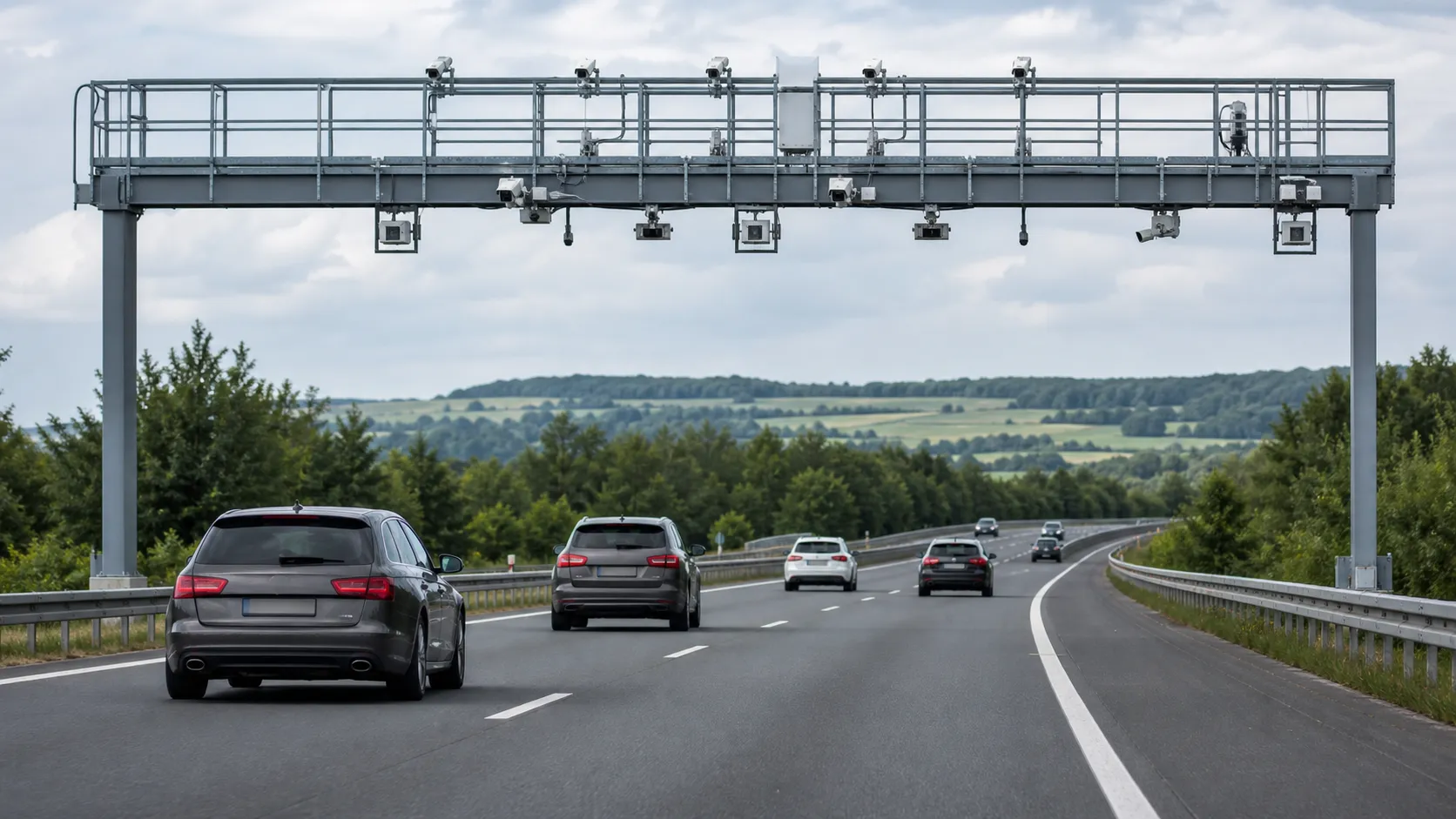
A vignette is a flat fee for time and a toll is a fee for distance, and that one distinction explains almost everything about paying for motorways in Europe. Eight countries sell vignettes, most of the rest charge at barriers, Germany charges cars nothing, and two countries quietly do both. Here is how it fits together when you are planning a route.
On this page
The short answer: time versus distance
A vignette is a prepaid permit that buys you a period of motorway use, a toll is a charge for the kilometres you actually drive, and a European road trip usually involves both before lunch. Austria, Switzerland, Czechia, Slovakia, Slovenia, Hungary, Romania and Bulgaria run vignettes. France, Italy, Spain, Portugal, Croatia, Poland and Greece run tolls. Germany does neither for cars, which is why so many people first meet the word "vignette" fifty kilometres past Munich.
Behind the wheel the two feel nothing alike. A vignette means no booth, no ticket, just a camera you never notice. A toll means stop, take a ticket, drive, stop again, pay. A vignette is cheap if you cross a whole country and mildly infuriating if you clip one corner of it. A toll is fair by the kilometre and annoying by the queue.
How a vignette works when you cross a border
A digital vignette is a registration of your licence plate in a national toll database for a set period, and the motorway cameras check that register rather than your windscreen. All eight vignette countries sell this plate-linked version. Type the plate, choose a duration, pay, and from the start date the car is legal on the tolled network. Austria still sells a sticker too, but the principle is identical: a fixed fee for a fixed window.
Two rules trip people up. The vignette belongs to the plate, so a typo leaves you unregistered, and the confirmation email is where you catch it. And validity does not always start when you pay. The official ASFINAG toll shop states that the 1-day and 10-day Austrian vignettes are valid immediately, while the 2-month and annual versions bought online by a private buyer only become valid from the 18th day unless you waive the withdrawal right. Slovakia goes the other way: the eznamka.sk operator notice for the 2026 edition lets you postpone the start by up to 60 days. Read the start date before you pay. Every time.
How a toll road works, and why a vignette cannot help you there
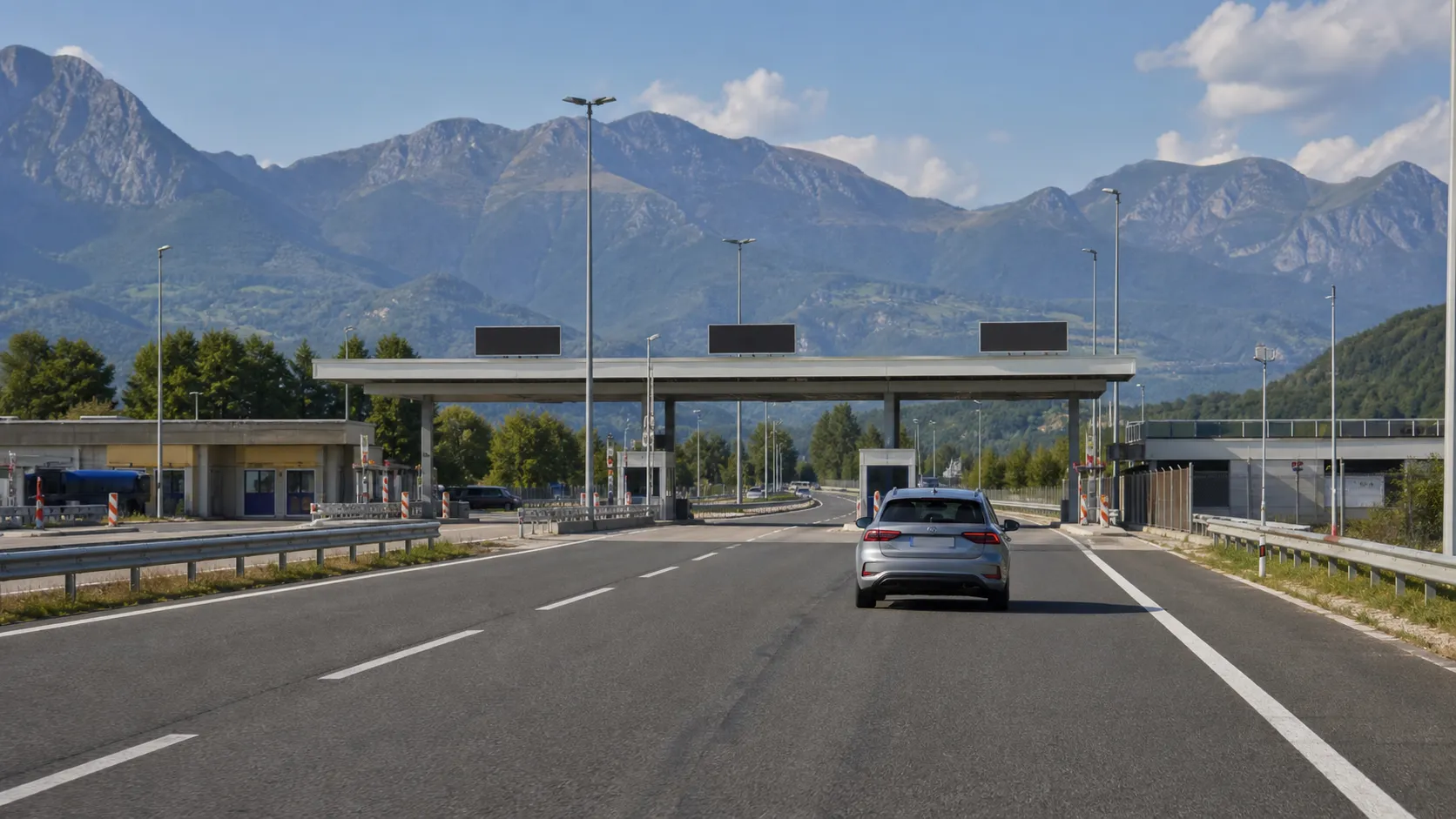
A toll road charges for distance, collected at a barrier or by a camera gantry, and no vignette anywhere in Europe will open a French or Italian toll barrier. On the classic French and Italian motorways you take a ticket on entry and pay on exit for the exact stretch you used. Croatia works the same way. Some countries have moved to free-flow gantries with no barrier at all, where a camera photographs the plate and you settle up online or through a windscreen tag.
The budgeting consequence is simple. Toll countries cost more the further you go, vignette countries cost the same for 40 kilometres or 400. A 10-day Austrian vignette at €12.80 on the 2026 ASFINAG tariff covers every Autobahn kilometre in the country for a week and a half. A day on an Italian autostrada is paid exit by exit, and nobody can quote a fixed figure until they know your junctions.
Countries that charge both: Austria's section tolls and the Swiss tunnels
Austria and Switzerland each require a vignette and then charge extra on a few alpine crossings, and this is the part of European motorway charging that catches the most drivers out. ASFINAG runs six Austrian section tolls outside the vignette. Its section toll page lists the 2026 single-passage car prices as €12.50 for the A13 Brenner, €15.00 for the A10 Tauern and Katschberg tunnels, €13.00 for the S16 Arlberg tunnel, €9.00 for the A11 Karawanken tunnel, €12.00 for the A9 Gleinalm tunnel and €7.00 for the A9 Bosruck tunnel. You pay at the barrier or buy a digital section ticket in advance. ASFINAG adds that no vignette is needed between the toll stations themselves, which only helps if your entire Austrian drive is the Brenner. For how that plays out on a real trip, see our Munich to Venice by car guide. The Austria vignette page has the full list.
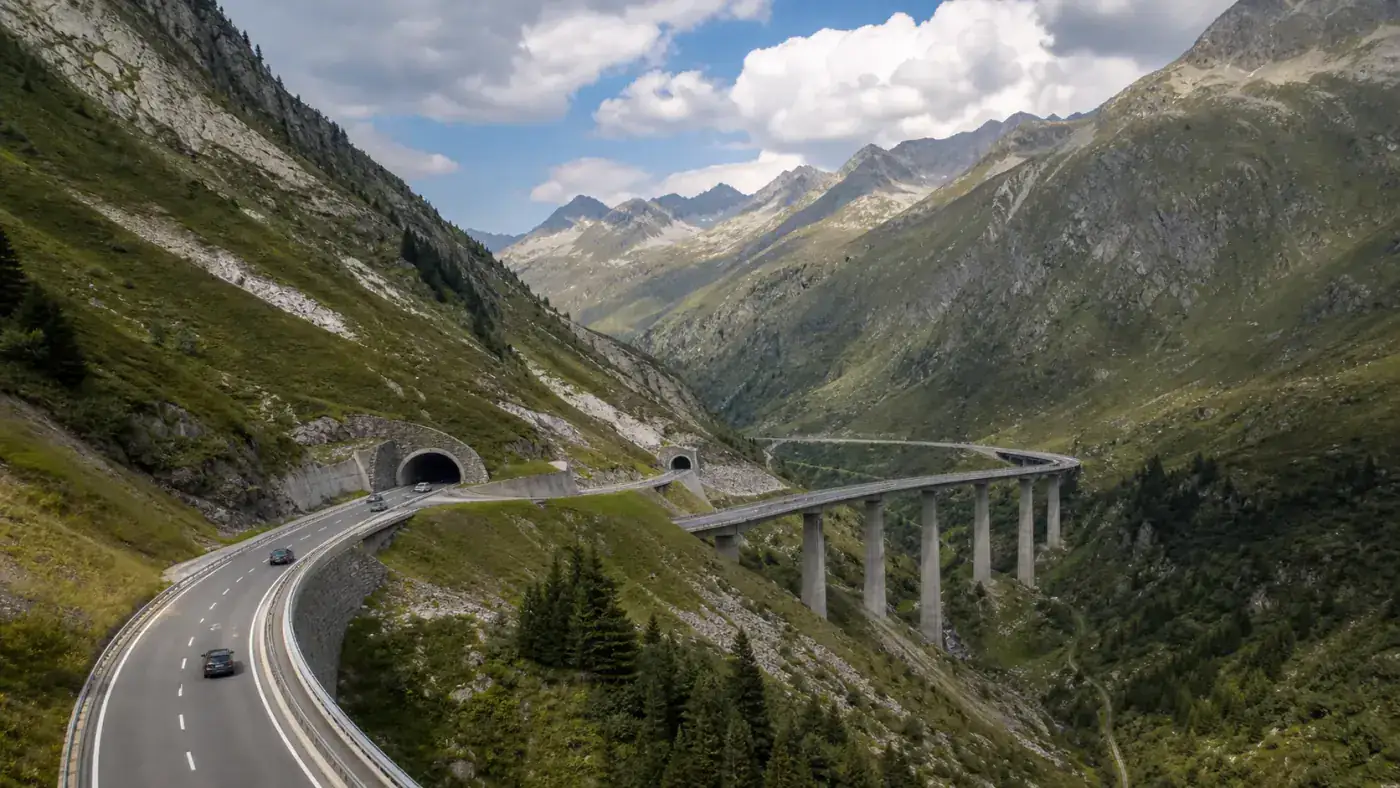
Switzerland is the mirror image: one product, the CHF 40 annual vignette, which the Federal Office for Customs and Border Security lists as valid from 1 December 2025 to 31 January 2027 for the 2026 edition, plus a handful of separately tolled tunnels covered on the Switzerland vignette page. A two-hour transit and a year of commuting cost exactly the same. Grumble, then buy it.
Which country needs what
Eight countries need a vignette, seven charge distance tolls, Germany charges cars nothing on the Autobahn, and the table below puts the whole map on one screen. Prices are official 2026 operator tariffs checked in September 2026. Where an operator publishes only in local currency or changed its tariff mid-year, the country page carries the current figure.
| Country | System for a car | Typical visitor cost | Source and note |
|---|---|---|---|
| Austria | Vignette plus six section tolls | €12.80 for 10 days | ASFINAG toll shop, 2026 tariff; section tolls extra |
| Switzerland | Annual vignette plus tunnel tolls | CHF 40, annual only | FOCBS; valid 1 December 2025 to 31 January 2027 |
| Czechia | Vignette | CZK 300 for 10 days | eDalnice price list valid from 1 January 2026 |
| Slovakia | Vignette | €10.80 for 10 days | eznamka.sk, 2026 edition, unchanged from 2025 |
| Slovenia | Vignette | €16.00 for 7 days | DARS e-vinjeta portal, class 2A, checked September 2026 |
| Hungary | Vignette | See country page | NÚSZ e-matrica, priced in forints |
| Romania | Vignette, national roads too | See country page | CNAIR rovinieta, charged in lei at the daily rate |
| Bulgaria | Vignette, national roads too | See country page | BGTOLL, tariff changed 1 August 2026 |
| Germany | Free for cars | Nothing | No car toll and no vignette on the Autobahn |
| France, Italy, Spain, Portugal, Croatia, Poland, Greece | Distance tolls | Depends on the route | Paid at barriers or free-flow gantries; no vignette exists |
Sources: ASFINAG toll shop and section toll page, Swiss FOCBS, eDalnice, eznamka.sk, DARS, all checked September 2026. In Romania and Bulgaria the permit also applies on ordinary national roads.
Budgeting a real route
The cost of a European route is one vignette per vignette country crossed, plus any section tolls on your road, plus distance tolls in barrier countries, and the fastest way to get it right is to count border crossings on a map before you count euros. Our guide to which European countries need a vignette lists all eight with the shortest pass each sells. Check your motorway against Austria's six section tolls. Then accept that France and Italy will tell you their price at the exit, and not a moment before.
A worked example. Munich to the Croatian coast via Salzburg and Villach: an Austrian 10-day vignette at €12.80, the A10 Tauern section toll at €15.00 per passage, the A11 Karawanken tunnel at €9.00 per passage, a Slovenian weekly e-vinjeta at €16.00, then Croatian barrier tolls to the coast. Four fixed items you can settle from your sofa, one variable item you pay at a booth. Swap Croatia for Italy and the barrier bill changes, but the shape of the sum never does. The full leg-by-leg version of this trip, including how to cover a two-week stay, is in our guide to driving from Germany to Croatia.
Where drivers overpay
Drivers overpay on European motorways in three predictable ways, none of them a fine. Wrong duration: two Austrian 1-day vignettes at €9.60 each cost more than one 10-day vignette at €12.80 on the 2026 ASFINAG tariff, so a weekend return trip should almost never use the daily pass. Wrong vehicle class, which the Slovenia vignette page explains: a high-roof camper falls into class 2B and pays double the car rate, and the cameras measure height. And mixing the two systems up. A vignette portal cannot sell you a French péage, and no Italian toll booth cares that you hold a Czech e-vignette.
Fines are a separate subject. Every vignette country enforces by camera, each country page states the amount plainly, our guide to driving without a vignette puts all eight 2026 penalties in one table, and the cheapest insurance is the vignette itself, registered before the border.
Sorting the vignette half before you leave
The simplest way to handle the vignette half of a route is to register every pass you need against your plate before you set off, and Vignettera does that in one checkout for all eight countries. Pick the countries, enter your plate once, and the team places each official digital vignette in the national system and emails the confirmations, state fee and service fee itemised before you pay. Order your official digital vignettes here, then spend the drive thinking about the coast road rather than the toll booth. The barrier countries will still want your card at the exit. Nobody has solved that one yet.
Vignette versus toll FAQ
What is the difference between a vignette and a toll?
A vignette is a prepaid permit for a fixed period of motorway use, bought in advance and linked to your licence plate, while a toll is a charge for the distance you actually drive, paid at a barrier or through a camera gantry. Austria, Switzerland, Czechia, Slovakia, Slovenia, Hungary, Romania and Bulgaria use vignettes. France, Italy, Spain, Portugal, Croatia, Poland and Greece use tolls.
Do any countries charge both a vignette and tolls?
Yes. Austria requires a vignette on its motorways and also charges separate section tolls on six alpine crossings, including the A13 Brenner at €12.50 and the A10 Tauern at €15.00 per passage for a car in 2026 according to ASFINAG. Switzerland requires the CHF 40 annual vignette and tolls a small number of tunnels separately.
Can I pay a toll road with a vignette?
No. A vignette only covers the tolled motorway network of the country that issued it, and it has no value at a toll barrier in France, Italy, Croatia or any other distance-toll country. Budget for both when a route crosses a vignette country and a toll country.
Do I need a vignette if I drive through Germany?
No. Germany charges no motorway toll for cars and sells no vignette, so a drive that stays inside Germany costs nothing beyond fuel. The vignette question starts at the first border into Austria, Switzerland or Czechia, and all eight vignette countries are listed in the guide to which European countries need a vignette.